How to Start an Event Setup & Breakdown Side Hustle
Weddings, parties, conferences and community events all require physical setup before guests arrive and cleanup after everyone leaves. You solve that problem by providing dependable labor for tables, chairs, decorations, equipment and event teardown.
What Problem Does Event Setup & Breakdown Solve?
Events need a large amount of physical work completed in a short period of time. Venues, planners and hosts often need extra hands before an event starts and again when everything must come down quickly after it ends.
Provide Extra Labor
Help move and arrange tables, chairs, staging pieces, signage and approved event equipment.
Meet Tight Deadlines
Event spaces often have limited setup windows. Dependable workers help planners get everything ready before guests arrive.
Handle the Breakdown
After the event, items must be packed, stacked, loaded and removed so the venue can be returned to its required condition.
What Do You Need to Start?
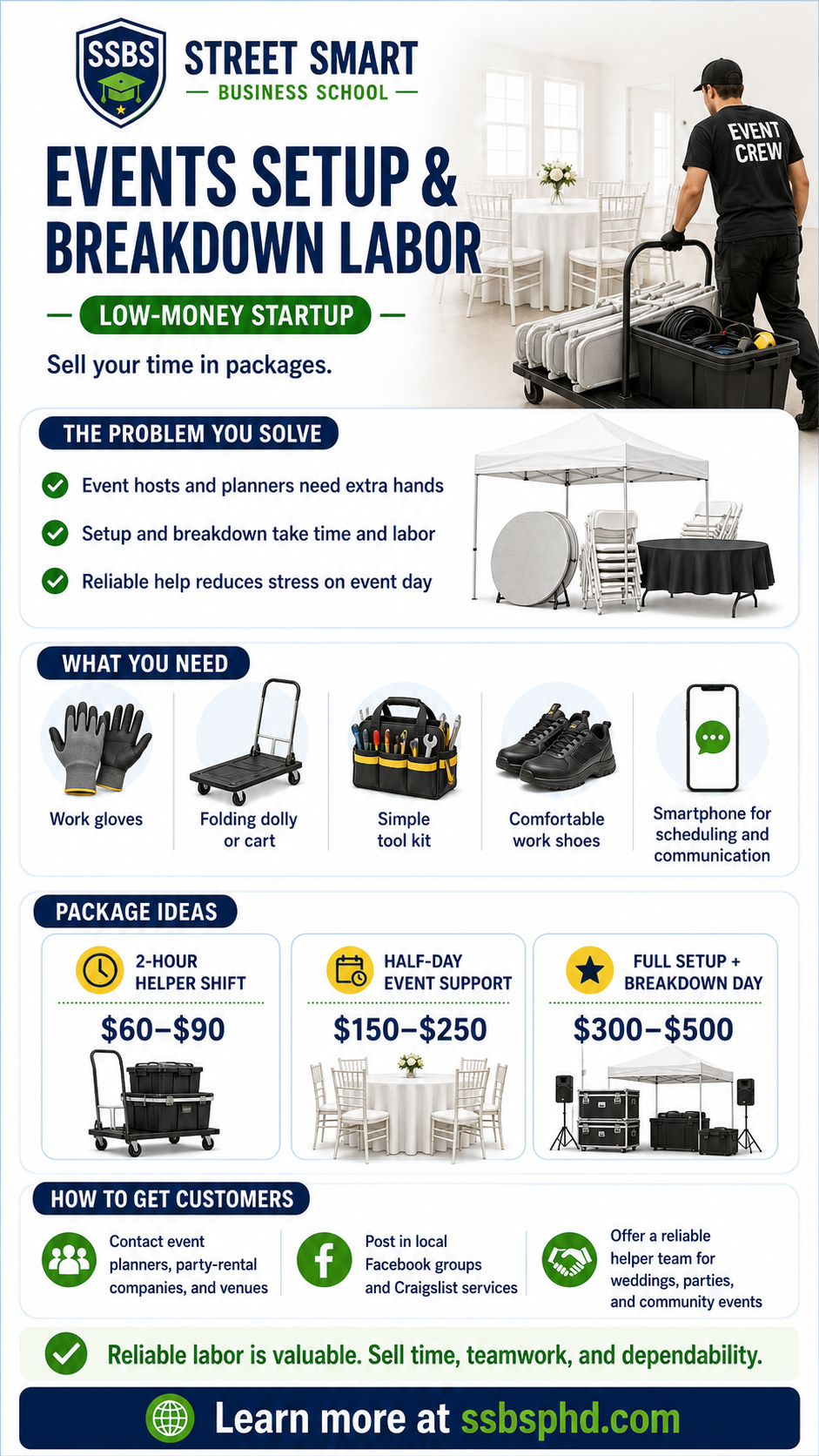
This is primarily a labor business. You can start with basic protective equipment, dependable transportation and a willingness to work when events actually happen — including evenings and weekends.
Basic Work Gear
- Work gloves
- Comfortable closed-toe shoes
- Work clothing
- Basic personal protective equipment
Useful Equipment
- Small hand-tool kit
- Utility cart or dolly when appropriate
- Flashlight
- Phone charger or power bank
Business Essentials
- Reliable transportation
- Smartphone
- Calendar and scheduling system
- Payment method or invoicing system
Event Setup & Breakdown Pricing Ideas
Pricing can depend on the number of hours, physical workload, event size, travel and whether the job includes setup, breakdown or both.
2-Hour Labor Block
Half-Day Event Labor
Full Setup + Breakdown
How Do You Get Your First Event Labor Customers?
The best prospects are businesses and professionals who regularly organize events and repeatedly need dependable people they can call when extra labor is required.
Contact Event Planners
Introduce yourself to local wedding planners, party planners and independent event coordinators who regularly need additional help.
Build Relationships With Rental Companies
Table, chair, tent and event-rental businesses may need people who can assist with loading, placement and breakdown work.
Reach Venues & Local Markets
Contact banquet halls, community centers, venues and local event businesses, and use Craigslist or community listings to find one-time jobs.
The Real Opportunity: Become the Person Planners Call First
An event planner may organize dozens of events every year. If you prove that you show up on time, follow directions and work efficiently, one event can lead to many more assignments.
Ready to Turn Event Labor Into a Real Side Hustle?
Luna, the Street Smart Business School AI assistant, can help you define your services, build your pricing, identify event businesses to target and create a practical plan for landing your first paid jobs.
- Define exactly which event services you will offer
- Build your 2-hour, half-day and full-event pricing
- Identify planners, venues and rental companies to target
- Create a first-customer action plan
Build Your Side Hustle Step by Step
Use the SSBS Fillable Side Hustle Workbook to turn event labor into a defined service, pricing strategy, customer plan and practical step-by-step launch.
- Define the event services you will offer
- Build your labor and project pricing
- Identify your ideal event customers
- Create your customer acquisition strategy
- Build your scheduling and booking process
- Plan repeat business and referrals
- Create your step-by-step launch plan
Explore More SSBS Side Hustles
Event Setup & Breakdown Frequently Asked Questions
What do I need to start an event setup side hustle?
A basic setup can include work gloves, appropriate shoes, simple hand tools, a smartphone, reliable transportation and a scheduling and payment system.
What kind of work does event setup involve?
Depending on the event, work can include moving and arranging tables and chairs, placing approved decorations and signage, assisting with loading and unloading, and helping break down the event afterward.
How do I find event setup customers?
Potential customers include event planners, wedding planners, venues, party-rental businesses, banquet facilities and local organizations that regularly host events.
Can event setup work lead to repeat business?
Yes. Event planners, venues and rental companies may need dependable workers repeatedly throughout the year. Actual demand and profitability depend on your local market, pricing and execution.